

Sustainable materials are products and inputs that minimize environmental and health impacts across their entire lifecycle, from raw material extraction through manufacturing, use, and disposal. The importance of sustainable materials reaches into every room of your home, every item of clothing you wear, and every product you buy. Certified wood, organic cotton, and recycled plastics each represent a category where your daily choices directly affect resource depletion, carbon emissions, and ecological balance. The EPA’s Sustainable Materials Management framework defines this discipline as managing materials to reduce environmental impacts across their full lifecycle, and that framework applies just as much to your kitchen counter as it does to a construction site.
Why sustainable materials matter in daily life
The core reason sustainable materials matter comes down to one fact: every product you use was made from something extracted from the planet, and that extraction has consequences. The EPA places source reduction at the top of its waste management hierarchy because preventing material use in the first place reduces lifecycle energy consumption and waste generation more effectively than any downstream solution. That means the most powerful environmental decision you make happens before you buy anything at all.

Buildings illustrate this point with hard numbers. Buildings consume 36% of final energy worldwide, with interior material manufacturing accounting for nearly 28% of that figure. Every flooring choice, every cabinet material, and every insulation product you select contributes to that number. Choosing low-embodied-carbon alternatives like reclaimed wood, recycled steel, or natural fiber insulation directly reduces your share of that global total.
The same logic applies to clothing and packaging. Cotton farming, synthetic fiber production, and single-use plastic packaging each carry significant upstream costs in water, energy, and chemical inputs. When you choose products made from recycled or certified materials, you reduce demand for virgin resource extraction at the source.
- Source reduction prevents waste before it forms, making it more effective than recycling or reuse
- Embodied carbon in building materials is largely fixed at the point of construction, so early choices carry the most weight
- Textile production for a single cotton garment can require thousands of liters of water, making fiber selection a meaningful daily decision
- Packaging materials made from recycled content reduce landfill pressure and lower manufacturing energy demands
Pro Tip: When renovating or furnishing a space, specify materials before construction begins. According to the EN 15978 whole-life carbon standard, upfront embodied carbon is locked in at the construction stage and cannot be undone by later retrofits, making early decisions the highest-leverage carbon intervention available.
How green marketing shapes your sustainable choices
Knowing that sustainable materials matter and actually buying them are two different things. A 2026 systematic review published in Future Business Journal analyzed 78 studies and found that green marketing works through three pathways: cognitive (information and awareness), affective (emotional connection), and behavioral (habit and identity). Trust is the factor that connects all three. Without it, even well-intentioned consumers default to familiar, cheaper, or more convenient options.
The attitude-behavior gap is the biggest barrier between caring about sustainability and acting on it. You might believe organic cotton is better for the environment, but if the label is confusing, the price is higher, and the brand’s claims feel vague, you buy the cheaper option. Closing that gap requires credible communication, third-party certifications, and emotional resonance with your values.
Here is what to look for when evaluating green claims:
- Third-party certifications like GOTS (Global Organic Textile Standard), FSC (Forest Stewardship Council), and Cradle to Cradle provide independent verification of material claims
- Lifecycle transparency means a brand discloses where materials come from and how they are processed, not just the end product
- Specific impact data replaces vague language like “eco-friendly” with measurable claims such as percentage of recycled content or carbon offset figures
- Consistent brand behavior across product lines, packaging, and supply chain signals genuine commitment rather than selective greenwashing
Pro Tip: Search for a product’s certification number on the certifying body’s website before purchasing. GOTS and FSC both maintain public databases. A claim that cannot be verified in 60 seconds is a claim worth questioning.
Organic cotton vs. recycled polyester: what the data actually shows
The word “sustainable” does not mean the same thing for every material, and a 2026 life cycle assessment study makes that point clearly. Organic cotton trousers carry a higher carbon footprint than polyester-cotton blends, with raw material acquisition accounting for 43 to 45% of total environmental impacts. That finding surprises most consumers who assume organic always means lower impact. The reality is that context determines the outcome.
Carbon footprints vary based on the energy grid powering the factory, the distance materials travel through the supply chain, and the recycling infrastructure available at end of life. A recycled polyester jacket made in a factory powered by renewable energy in Portugal carries a very different footprint than the same jacket made with coal-powered manufacturing in a region with no textile recycling. The label tells you the material. It rarely tells you the full story.
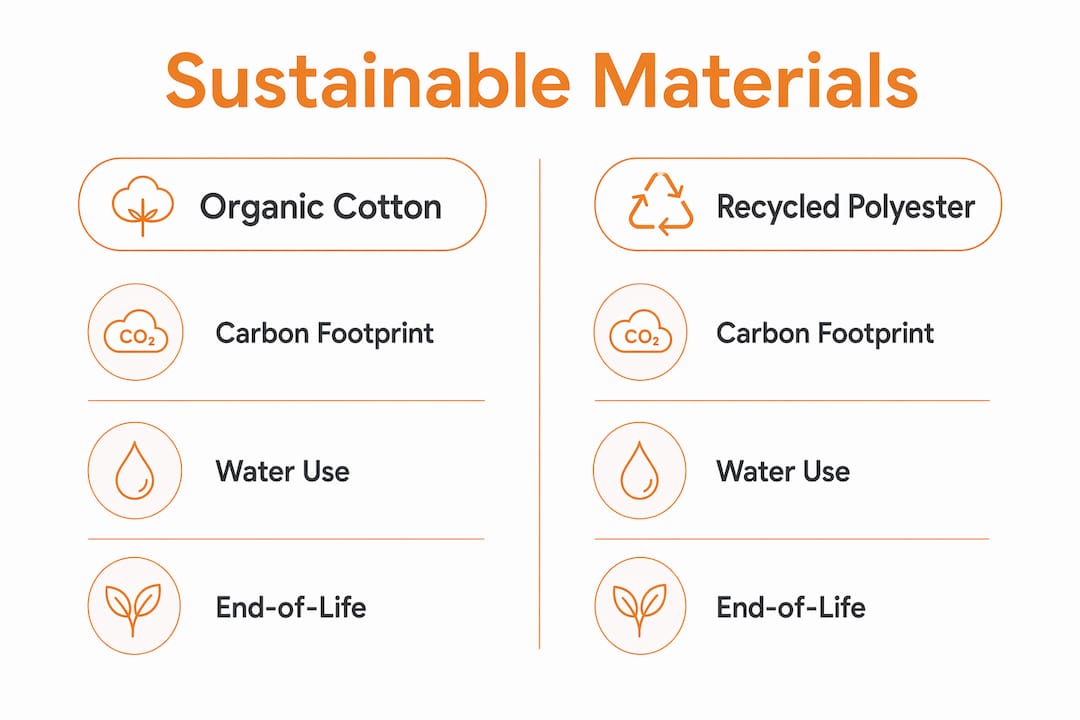
The table below compares common sustainable materials across key impact dimensions to help you make more informed choices.
| Material | Carbon footprint | Water use | End-of-life options |
|---|---|---|---|
| Organic cotton | Moderate to high (raw material stage dominant) | High | Biodegradable, compostable |
| Recycled polyester | Lower than virgin polyester | Low | Recyclable (limited infrastructure) |
| Sustainably sourced wood (FSC) | Low to moderate | Low | Biodegradable, reusable |
| Recycled aluminum | Very low vs. virgin | Very low | Infinitely recyclable |
| Bamboo fiber | Low (fast-growing crop) | Moderate | Biodegradable |
Designers working with the healthy materials framework developed by firms like Mithun connect embodied carbon reduction directly to indoor air quality. Materials that off-gas fewer volatile organic compounds (VOCs) are often the same materials with lower lifecycle carbon. That overlap means choosing healthier materials for your home frequently delivers environmental benefits as well.
For clothing specifically, understanding organic cotton’s benefits for skin contact and chemical exposure remains relevant even when the carbon comparison is nuanced. The right choice depends on which impact dimension matters most to you in a given purchase.
Practical ways to use sustainable materials every day
Sustainable choices in everyday life do not require a complete lifestyle overhaul. The most effective approach is to replace items as they wear out with more sustainable alternatives, rather than discarding functional products prematurely. Here is a practical sequence for building sustainable material habits into your routine.
- Start in the kitchen. Replace single-use plastic wrap with beeswax wraps, swap plastic utensils for bamboo alternatives, and choose products packaged in recycled cardboard or glass. These are low-cost, high-frequency swaps that compound over time.
- Audit your clothing purchases. Before buying new apparel, check for GOTS or Fair Trade certification. Look for brands that publish supply chain information. Sustainable streetwear brands and eco-conscious fashion labels now offer style-forward options without sacrificing transparency.
- Prioritize durability in home goods. Green buildings report nearly 20% lower maintenance costs compared to conventional construction. The same principle applies to consumer products. A well-made cast iron pan, a solid wood cutting board, or a stainless steel water bottle outlasts cheaper alternatives by years and generates far less waste.
- Engage with recycling correctly. The EPA’s advanced recycling programs use chemical and thermal processes to recover plastic feedstocks that mechanical recycling cannot handle. But recycling infrastructure has limits. Source reduction and proper waste segregation remain more effective than relying on recycling alone.
- Apply lifecycle thinking to big purchases. When buying furniture, flooring, or appliances, ask about material sourcing, energy efficiency, and end-of-life disposal. A piece of furniture made from reclaimed wood with a non-toxic finish will outperform a cheap particleboard alternative on every sustainability metric over a ten-year period.
Pro Tip: The single highest-impact daily habit is buying less and buying better. Sustainable materials need a system behavior perspective across the full lifecycle. A product that performs well during use but cannot be recycled or composted at end of life still creates a downstream problem.
Key takeaways
Sustainable materials reduce environmental harm at every stage of a product’s life, and the most powerful interventions happen at the point of selection, not disposal.
| Point | Details |
|---|---|
| Source reduction beats recycling | Preventing material use entirely is more effective than managing waste after the fact. |
| Early material choices lock in carbon | Embodied carbon in buildings and products is fixed at construction; later changes cost more and deliver less. |
| “Sustainable” is context-dependent | Organic cotton can carry a higher carbon footprint than recycled polyester depending on supply chain and energy source. |
| Trust determines purchasing behavior | Third-party certifications like GOTS and FSC close the attitude-behavior gap by providing verifiable claims. |
| Durability is a sustainability metric | Products that last longer generate less waste and typically cost less to maintain over their full lifespan. |
Why I think lifecycle thinking changes everything
Most sustainability conversations focus on recycling. That framing misses the bigger opportunity. After fifteen years of writing about consumer products and environmental impact, the pattern I keep seeing is that the decisions made before a product is manufactured matter far more than what happens to it afterward.
The attitude-behavior gap is real, and I have watched it frustrate well-meaning consumers who genuinely want to make better choices. The problem is not motivation. It is information quality. When a brand says “eco-friendly” without specifying what that means, it creates noise rather than signal. Consumers who encounter too much noise eventually stop trying to decode it.
What actually works is specificity. A brand that tells you its product contains 87% post-consumer recycled content, certified by a named third party, with a take-back program at end of life gives you something to act on. That level of transparency is rare, which is exactly why it builds loyalty when you find it.
My honest advice: start with one category where you make frequent purchases, learn the relevant certifications for that category, and apply that knowledge consistently. You do not need to become an expert in every material. You need to become an expert in the two or three product categories that matter most to your household. That focused approach delivers more real-world impact than trying to optimize everything at once and burning out.
— Green
Sustainable products worth exploring at Anvyx

Putting sustainable material principles into practice starts with the products you bring into your home. Anvyx curates premium, well-designed items built to last, from kitchen accessories to personal care tools, all selected with quality and longevity in mind. Durable products that serve your household for years are the practical expression of everything this article covers: less waste, lower lifecycle impact, and better value over time. If you share your home with a pet, the Anvyx pet care collection offers thoughtfully designed options that prioritize function and durability. For a broader look at what Anvyx offers across categories, the full product range is a good starting point for building a more intentional, lower-waste household.
FAQ
What are sustainable materials?
Sustainable materials are inputs and products designed to minimize environmental and health impacts across their full lifecycle, from extraction through disposal. Examples include FSC-certified wood, GOTS-certified organic cotton, recycled aluminum, and bamboo fiber.
Why do sustainable materials matter more than recycling?
The EPA places source reduction above recycling in its waste management hierarchy because preventing material use eliminates upstream energy consumption, water use, and emissions that recycling cannot recover. Recycling is valuable but addresses waste after it has already been created.
Is organic cotton always more sustainable than polyester?
No. A 2026 life cycle assessment found that organic cotton trousers can carry a higher carbon footprint than polyester-cotton blends, with raw material acquisition driving 43 to 45% of total impacts. The more sustainable choice depends on the specific supply chain, energy source, and end-of-life scenario.
How do I know if a green claim is trustworthy?
Look for third-party certifications such as GOTS, FSC, or Cradle to Cradle, and verify the certification number directly on the certifying body’s public database. Vague terms like “natural” or “eco-friendly” without supporting data or certification are not reliable indicators of environmental performance.
Do sustainable materials cost more?
Upfront costs are sometimes higher, but green buildings report nearly 20% lower maintenance costs over time, and durable consumer products generate less replacement spending. The lifecycle cost of a well-made sustainable product is typically lower than the cumulative cost of replacing cheaper alternatives repeatedly.