

Decoding product innovation claims means translating marketing language into measurable, verifiable product attributes backed by scientific and regulatory evidence. Every “breakthrough formula” or “first-of-its-kind design” you encounter on a product label carries an implied promise. Regulatory bodies like the FTC and FDA set clear standards for what companies must prove before making those promises. Third-party certifiers like NSF International and USP add another layer of verification. This guide walks you through the exact process for analyzing innovation claims so you spend money on products that actually deliver.
How to decode product innovation claims by type
Not all product claims carry the same evidentiary burden, and misidentifying the claim type is the most common mistake consumers make. Before you can evaluate a claim, you need to know what category it belongs to.
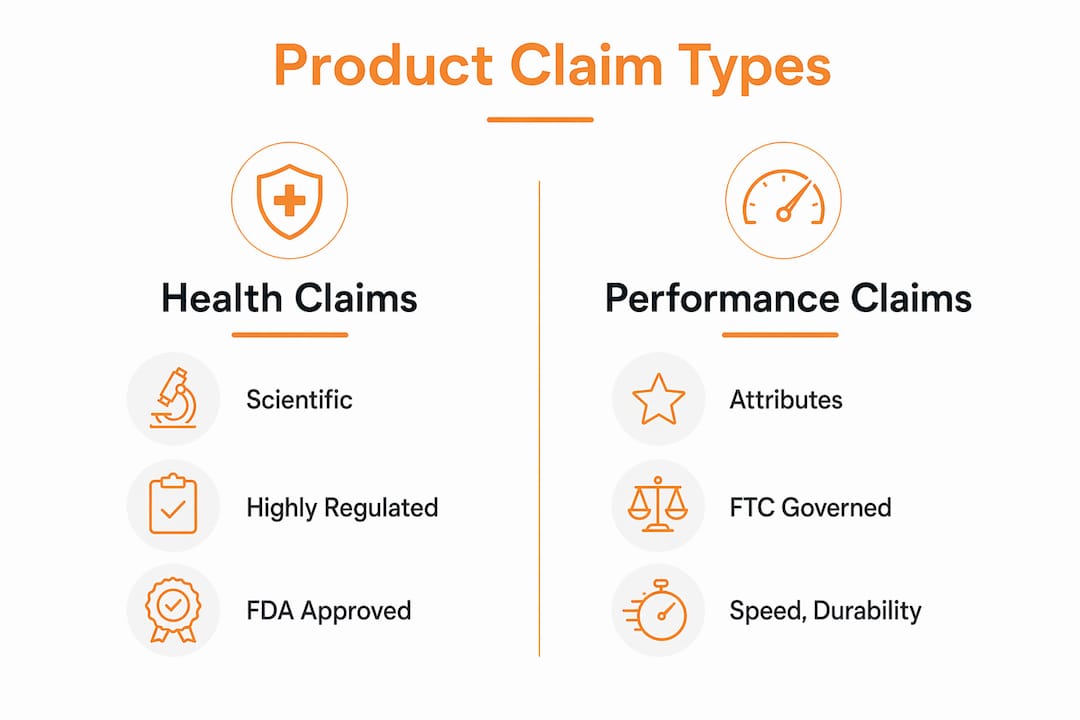
Health claims are the most tightly regulated. The FDA authorizes health claims only when significant scientific agreement exists among qualified experts, meaning strong, consistent, and reproducible evidence assessed as a totality. A cereal box stating “diets low in saturated fat may reduce the risk of heart disease” has cleared that bar. A supplement claiming to “support heart health” has not. That second example is a structure/function claim, which requires far less evidence and carries a mandatory disclaimer.

Performance claims cover product attributes like speed, durability, or efficiency. These are governed primarily by FTC standards rather than FDA rules. The FTC requires that companies hold proof before making any claim, with the evidentiary bar rising in proportion to the claim’s potential impact on consumers.
Vague innovation claims are the trickiest category. Phrases like “revolutionary technology,” “first to market,” or “industry-leading design” sound meaningful but often describe nothing measurable. Courts and regulators treat these differently from specific performance or health claims.
Here is how to categorize what you are reading:
- Health claim: References a disease, condition, or bodily function with a direct cause-and-effect statement. Requires FDA authorization or a structure/function disclaimer.
- Performance claim: States a specific, testable attribute. “Lasts 3x longer than standard batteries” is a performance claim.
- Vague innovation claim: Uses superlatives or novelty language without tying the statement to a measurable product characteristic.
Pro Tip: Before you research any claim further, write down the exact words from the label. Then ask: what specific, measurable outcome is this promising? If you cannot answer that question, you are looking at a vague innovation claim.
How do you verify the scientific backing of a product claim?
Once you have identified the claim type, the next step is tracing its evidentiary foundation. The FTC uses the Pfizer factors to assess whether a company has a reasonable basis for its claims. Those factors include the type of claim, the product’s benefits, and the overall impression the advertisement creates on a reasonable consumer.
Follow this process to evaluate scientific backing:
-
Identify the specific ingredient, dose, and population. Many claims fail because the cited study used a different dose, a different form of an ingredient, or a population that does not match the product’s intended user. Claim validity depends on matching the exact product formulation, dosing, study duration, and target population.
-
Look for randomized controlled trials. RCTs are the gold standard for establishing cause and effect. Observational studies and animal studies are weaker forms of evidence. If a brand cites only one small study, that is a red flag.
-
Check the FDA’s authorized health claims database. The FDA publishes a list of authorized health claims on its website. If a product makes a disease-risk claim that is not on that list, the company is either operating under a qualified health claim (which requires a disclaimer) or making an unauthorized claim.
-
Assess consistency across the evidence base. The FDA’s SSA standard requires that evidence be consistent and reproducible, not just present. A single positive study surrounded by five negative studies does not meet that bar.
-
Read the disclaimers carefully. Phrases like “these statements have not been evaluated by the FDA” signal a structure/function claim. That is not automatically a problem, but it tells you the evidentiary standard is lower.
“Decoding requires focus on measurable product attributes rather than isolated promotional statements.” The overall net impression a claim creates on consumers is what regulators measure, not the literal meaning of a single sentence.
Pro Tip: Google Scholar and PubMed are free databases where you can search for studies by ingredient name. If a brand cannot point you to published research, ask why.
What does third-party certification actually prove?
Third-party certification logos are among the most misunderstood elements in product marketing. A logo from NSF Certified for Sport, USP Verified, or Informed Sport signals that an independent lab has tested the product. What it does not automatically prove is that the specific bottle you are holding was part of that test.
Third-party supplement testing typically verifies ingredient identity, potency, and contaminant status. These are meaningful checks. But certification is not always legally mandated for finished products, and the scope of testing varies by certifier and program.
Here is what third-party certification covers and what it does not:
| What certification checks | What it does not guarantee |
|---|---|
| Ingredient identity (is it what the label says?) | That every batch was tested |
| Potency (is the dose accurate?) | That the product is effective for its claimed use |
| Contaminants (heavy metals, banned substances) | That the innovation claim is scientifically valid |
| Label accuracy | That raw materials and finished product match |
The critical verification step most consumers skip is confirming that their exact product and batch number appear in the certifier’s public database. Logos can be copied; a logo on packaging proves nothing unless you cross-check it. NSF, USP, and Informed Sport all maintain searchable online databases where you can enter a product name or certification number.
Watch for these specific red flags when reviewing test documentation:
- Results dated more than 12 months ago with no updated testing
- Certificates that list raw material testing rather than finished-product testing
- Batch numbers on the certificate that do not match the product you purchased
- PDF documents where fonts or formatting appear inconsistent, which can indicate digital editing of results
UL Solutions makes the point that as products become more digital and software-enabled, independent verification frameworks become more critical, not less. Certification supports trust, but it does not directly prove that an innovation claim is valid. Use it as one data point in a broader evaluation.
What legal limits exist on “first-to-market” innovation claims?
Legal rulings give consumers a useful framework for understanding what innovation language is actually worth. In Vericool World, LLC v. Igloo Products Corp. (9th Circuit, 2026), the court clarified that false first-to-market claims are generally non-actionable under the Lanham Act unless they are tied to a tangible, observable product attribute.
This ruling matters for consumers because it reveals how courts think about marketing language. A company claiming to be “the first brand to use this technology” is making a statement about corporate history, not about what the product does for you. Courts treat that as puffery. A company claiming “our technology reduces cooking time by 40%” is making a testable, attribute-specific statement that carries legal accountability.
The legal standard for deceptive advertising is the overall net impression the claim creates on a reasonable consumer, not the literal parsing of individual words.
What this means practically: when you encounter innovation language, ask whether the claim describes something you could measure, test, or observe in the product itself. “Patented design” is worth investigating because patents are public records you can look up. “Industry-leading innovation” is not worth investigating because it refers to nothing specific. Demanding measurable product characteristics rather than marketing slogans is both a consumer right and a practical filter for better purchasing decisions.
Key takeaways
Decoding product innovation claims requires matching claim type to evidentiary standard, verifying third-party certifications at the batch level, and recognizing that vague innovation language carries no legal or scientific weight.
| Point | Details |
|---|---|
| Classify the claim first | Identify whether it is a health, performance, or vague innovation claim before evaluating evidence. |
| Match evidence to the product | Studies must reflect the exact ingredient, dose, duration, and population of the marketed product. |
| Verify certifications in databases | Confirm your specific product and batch number in NSF, USP, or Informed Sport’s public records. |
| Apply the net impression test | Regulators measure the overall message a claim sends, not just its literal wording. |
| Demand measurable attributes | Reject claims that cannot be tied to a specific, observable product characteristic. |
Why most consumers are looking at this backwards
After 15 years of watching how people respond to product marketing, I have noticed a consistent pattern: consumers spend most of their skepticism on price and almost none of it on claims. A $12 supplement gets scrutinized for cost. A label claiming “clinically proven results” gets accepted at face value.
The uncomfortable truth is that “clinically proven” is one of the least regulated phrases in consumer marketing. It does not specify what was proven, in whom, at what dose, or by whom. I have seen that phrase attached to studies with 20 participants and no control group. The FTC’s substantiation framework exists precisely because the gap between what a claim implies and what the evidence supports can be enormous.
What I find genuinely useful is the net impression test. When you read a product claim, ask yourself: what would a reasonable person believe this product will do for them? Then ask whether the evidence actually supports that belief. That gap is where most misleading claims live.
Third-party certifications are valuable, but I have seen consumers treat a certification logo as a substitute for reading the actual claim. NSF certification tells you the product contains what it says it contains. It does not tell you whether the ingredient works. Those are two entirely different questions, and conflating them is how brands extract trust they have not fully earned.
The most empowering shift you can make is moving from “does this product have a certification?” to “does this specific claim have specific evidence?” That question puts you in control of the evaluation rather than at the mercy of whoever designed the label.
— Green
See how Anvyx approaches product transparency
At Anvyx, every product listed on the platform is selected with the same evaluation criteria this article describes: measurable performance attributes, quality materials, and claims that hold up to scrutiny. The 60-day money-back guarantee exists because Anvyx backs the products it curates, not just the marketing copy around them. Whether you are exploring pet care products with specific performance claims or kitchen tools like the Titanium Kaizen Pro Pan with documented material specifications, you can browse the full range of curated products at Anvyx and apply the verification framework from this article to every purchase you consider.
FAQ
What does it mean to decode a product innovation claim?
Decoding a product innovation claim means translating marketing language into specific, measurable product attributes and then checking whether credible evidence supports those attributes. The goal is to separate substantiated claims from promotional puffery.
What evidence standard does the FTC require for product claims?
The FTC requires that companies hold competent and reliable scientific evidence before making claims, with the standard rising for claims that carry greater potential impact on consumers. The Pfizer factors guide how regulators assess whether a reasonable basis exists.
How do I verify a third-party certification logo?
Search the certifier’s public database (NSF, USP, or Informed Sport) using the exact product name and batch number from your packaging. A logo alone is not sufficient proof; the specific product and batch must appear in the live database.
Are “first-to-market” or “innovative” claims legally enforceable?
Generally no. The 9th Circuit’s 2026 ruling in Vericool v. Igloo confirmed that first-to-market claims are non-actionable under the Lanham Act unless they misrepresent a tangible, observable product attribute. Vague innovation language is treated as puffery.
What is the difference between a health claim and a structure/function claim?
A health claim directly links a nutrient or ingredient to reducing the risk of a disease and requires FDA authorization based on significant scientific agreement. A structure/function claim describes how an ingredient affects a body system and requires only a disclaimer stating the FDA has not evaluated the claim.